How to mountain marathon
I often talk about mountain marathons as my favourite events to compete in and as great ways to practise and use our navigation skills.
The name is a little misleading though and people I chat to are often confused about the format of the event so this blog post explores this unique genre of competitive mountain running.
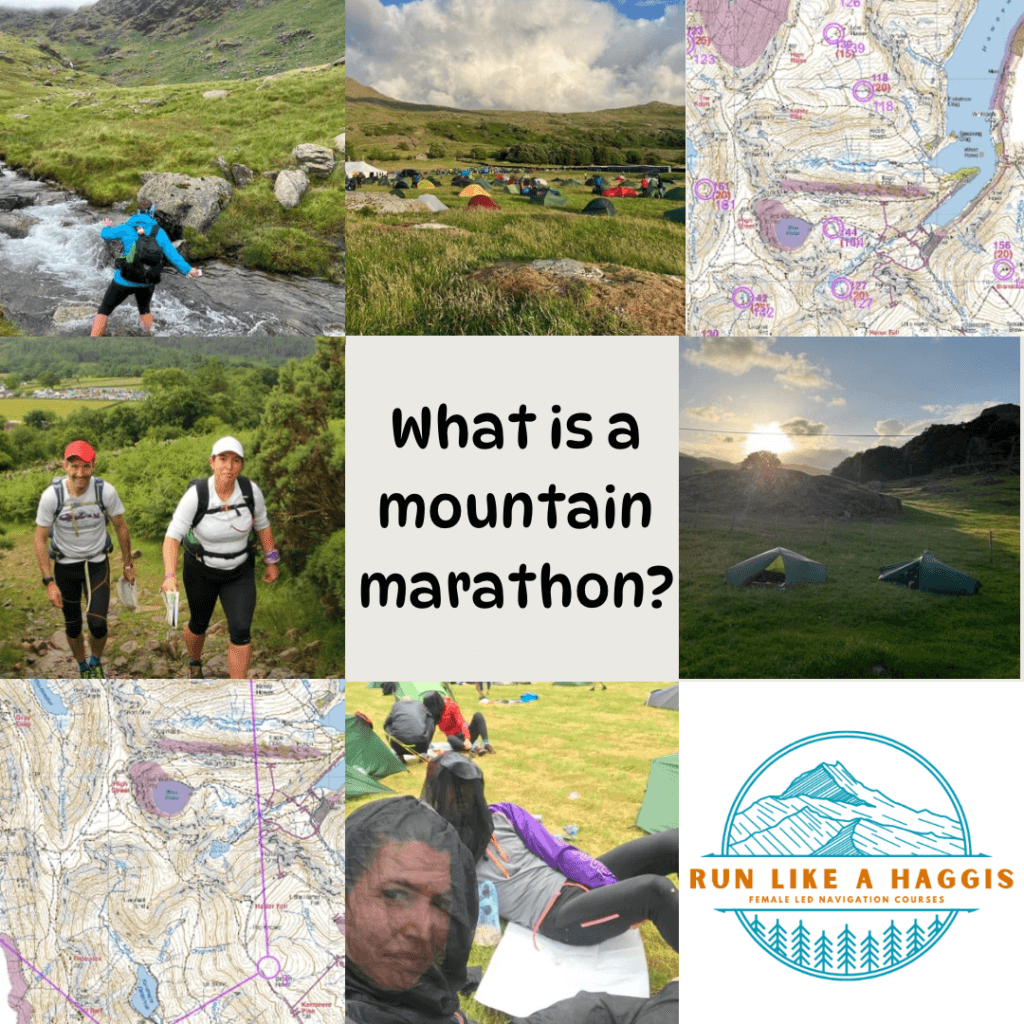
What is a mountain marathon?
The first misconception is that it isn’t 26.2 miles!
A mountain marathon is:
⛰️ usually a 2 day navigational event
⛰️ run in pairs
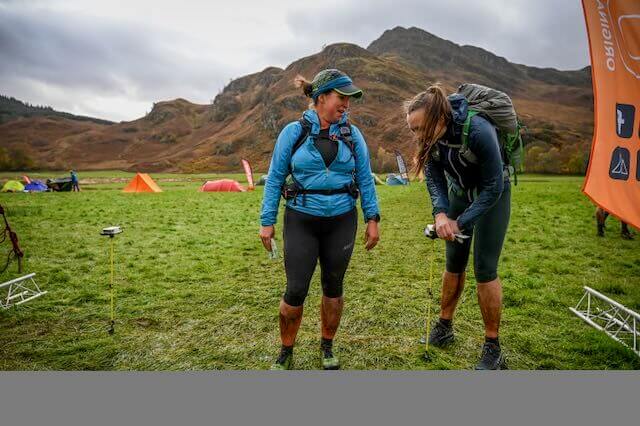
⛰️ self sufficient – with pairs carrying their tent, sleeping equipment, food, stove and any other equipment needed to keep safe in adverse weather.
⛰️ a race – but pairs are set off at time intervals
Which course should you choose?
So you fancy taking part in a mountain marathon?
Once you’ve decided to sign up for a self sufficient weekend of top mountain and navigation fun (Type 1 and Type 2😉), your first choice will be which kind of course you would like to do.
Linear Mountain Marathon Courses
These courses have a series of checkpoints that you must visit in numerical order. There will be a range of distances to choose from. The winners are those that complete the course in the quickest time across the 2 days of running.
For the OMM, this is the Elite, A and B.
For the Saunders Lakeland Mountain Marathon (SLMM), the courses are named after Lakeland Fells. The higher the mountain, the longer the course! The SLMM have 6 linear courses to choose from ranging for Scafell class (the longest) to Wansfell class (their entry level class).
It’s important to remember when you’re looking at the course descriptions that the distances and elevation gain numbers are straight line/optimal routes. Your actual distance and elevation gain is likely to be a bit more 🙃
PROS of the LINEAR course:
🧭 There’s no decision making about which control you need to go to next.
🧭 You have a good guide as to distance and elevation gain for each day
CONS of the LINEAR course:
🧭 If you can’t find a control then you DNF the course.
🧭 If you over reach and enter a course that is too hard, or the course planner makes it harder than expected, you may miss the cut offs for the day and DNF

Mountain Marathon Score Courses
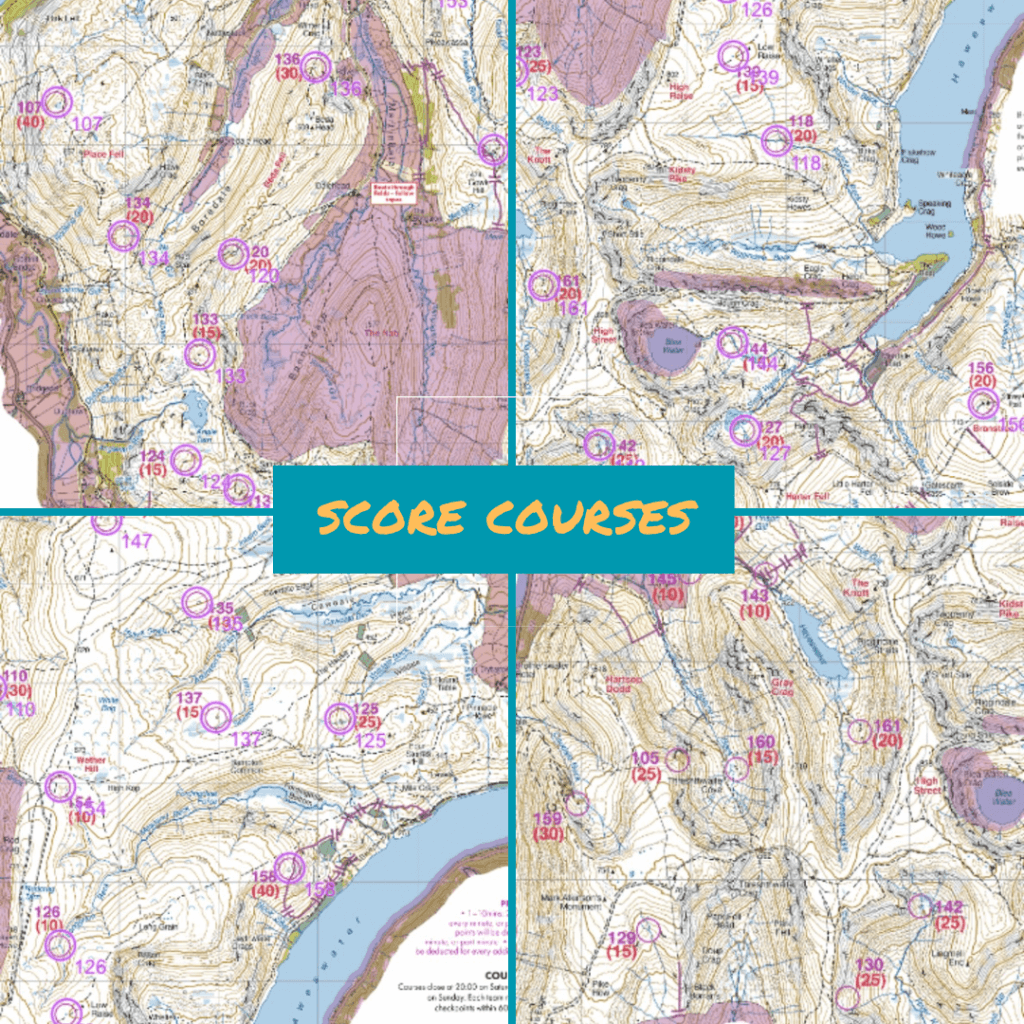
These courses are timed and on your map you will have a large range of checkpoints that you can choose to visit. Each checkpoint has an amount of points – in brackets after the checkpoint code – that you gain when you dib the checkpoint. The winners are those that gain the most points over the 2 days of running.
The OMM has a long score course (7 hours day 1, 6 hours day 2), medium score course (6 hours day 1, 5 hours day 2) and and a short score course (5 hours day 1, 4 hours day 2). The SLMM has one score course – Fairfield.
It should be noted that if you are late then you lose points at an increasing rate until you lose all your points when you’re 30 minutes or more over your course time.
PROS of the SCORE course:
🧭 You can go as far as you want on each day.
🧭 You get to have lots of discussions with your partner about which control to visit next.
CONS of the SCORE course:
🧭 You have to have lots of discussions with your partner about which control to visit next!
Do I have a favourite type of course?
I have completed each type of course several times. I think they’ve both got benefits as I’ve described. Andy and I completed the long score at the OMM last year as we wanted two long days out but we also wanted to guarantee completion. That was definitely the right course for where I was physically and mentally last October. Last month, we completed a long linear course at the SLMM. The more prescribed course and fewer discussions about where we’re going next and how much time we have left are beneficial for our partner dynamic!
What kit do you need for a mountain marathon?
As you will be self sufficient out in the mountains for two days and one night, there are some additional items (compared to your usual fell or trail run) for your kit list! The required kit list is divided into team kit (you can share the carrying of these between the two of you) and individual kit (each participant must carry each of these items).
Team mountain marathon kit
- Tent with integrated groundsheet, poles and pegs (large enough to accommodate both runners!)
- Stove, fuel and matches/lighter
- Food for two days
- First aid kit
Individual mountain marathon kit
- Bag (!)
- Fell shoes
- Sleeping bag – with insulation
- Survival bag
- Waterproof jacket and trousers
- Full length bottoms
- T shirt/base layer
- Long sleeve mid layer
- Hat
- Gloves
- Torch
- Compass
- Whistle
- Watch
- Waterproof pen/pencil
- Emergency food (you must finish with this in your bag!)
Extras:
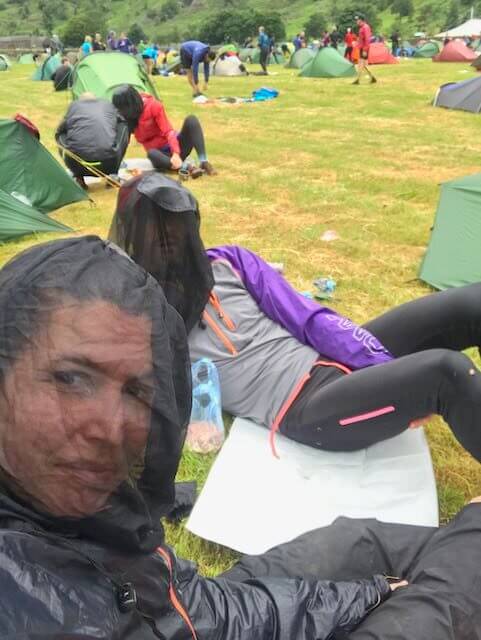
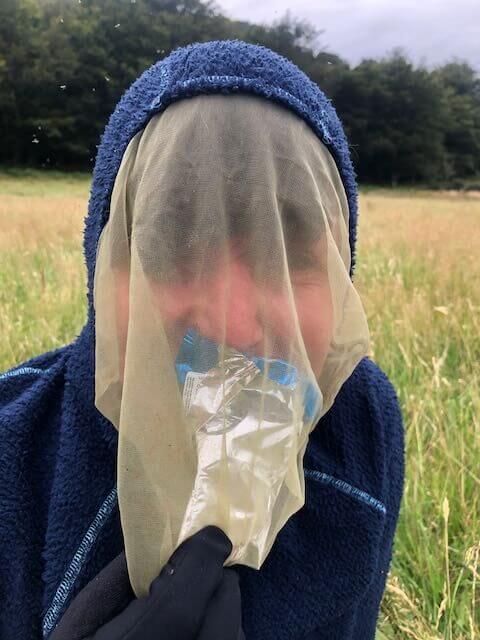
Midge nets are not on the kit list but if you are taking part in a summer mountain marathon I would say they are essential!
What kind of tent do you need for a mountain marathon?
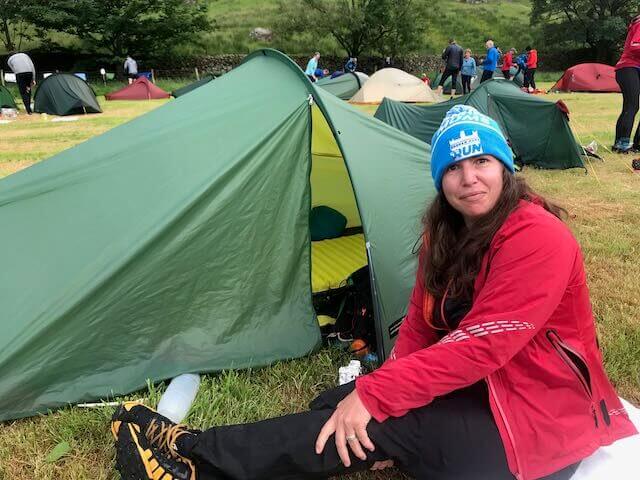
You need a tent that both you and your partner are able to sleep in. How small you are prepared to go depends on how cosy you are happy to get with your partner!
I have always used a Terranova Laser Competition 1. Mainly because this is the one my husband had when we first started competing in mountain marathons in 2014! This is a one man tent and so the sleeping arrangements are cosy.
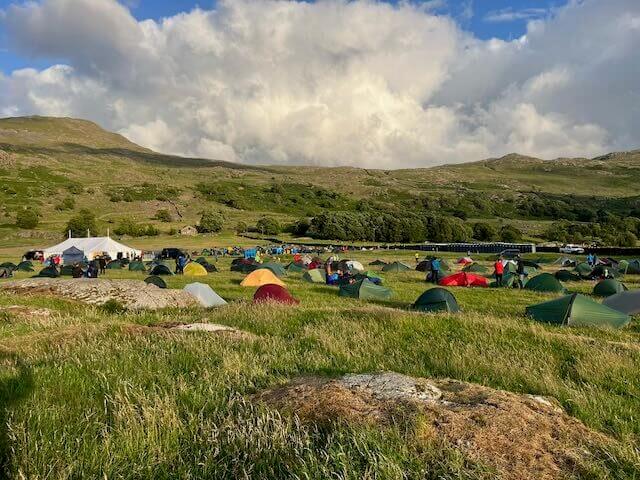
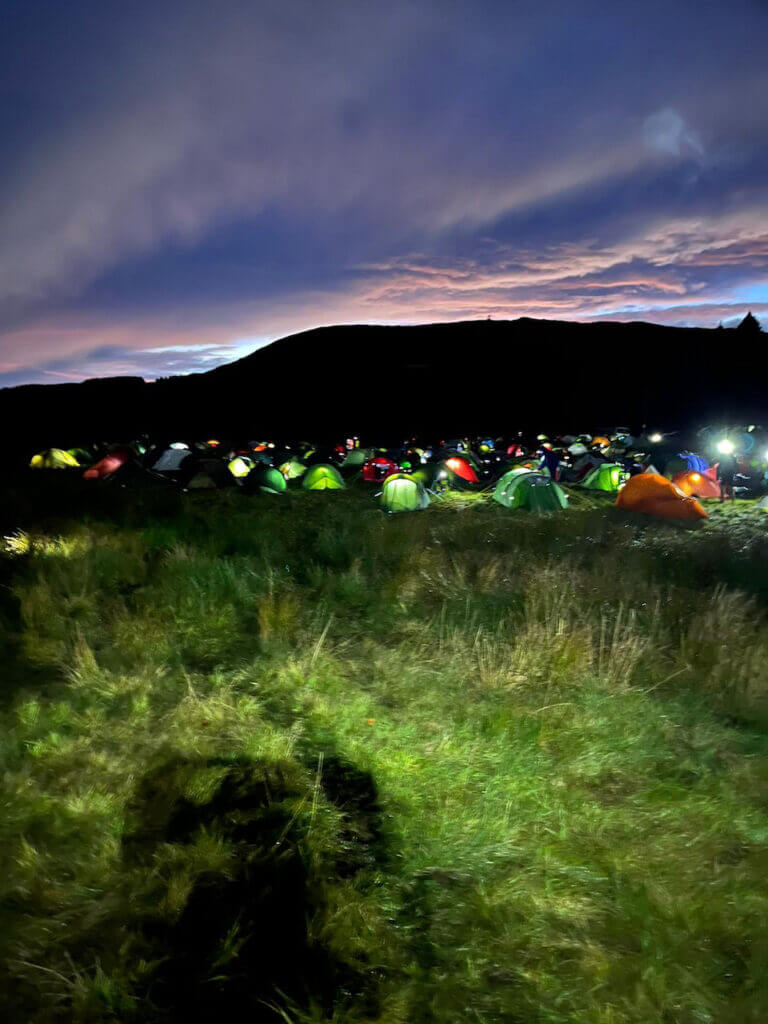
At the time, this was the tent that everyone had (navigating your way back to the correct small green tent after a visit to the portaloos in the middle of the night proved a bit of challenge on more than one occasion …). Now, technological advances mean that there are bigger tents on the market that are now much lighter than this one.
What food do you take on a mountain marathon?
Your day food will be whatever you usually take for a day in the mountains (just remember to bring enough for day 2!). What you take for you evening meal at mid camp depends on how much you are prepared to carry. When we started, we would take cous cous, with a cup a soup added and just add water. Along with a pack of salami or similar and pack of olives. For pudding? A malt loaf or something similar. Now, I prefer to take dehydrated expedition meal. These are usually 1000 calories and are enough to re fuel ahead of day 2. I have also taken to ordering an expedition meal for dessert. And a rice pudding meal for breakfast the next day! Other participants have been known to carry more weight and carry a meal of fresh pasta in to enjoy!
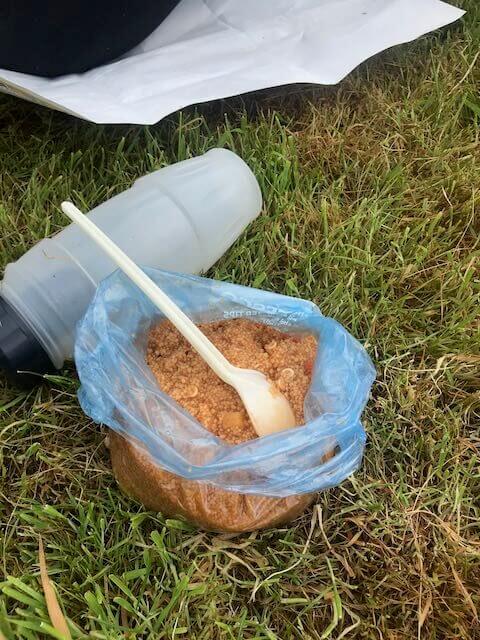
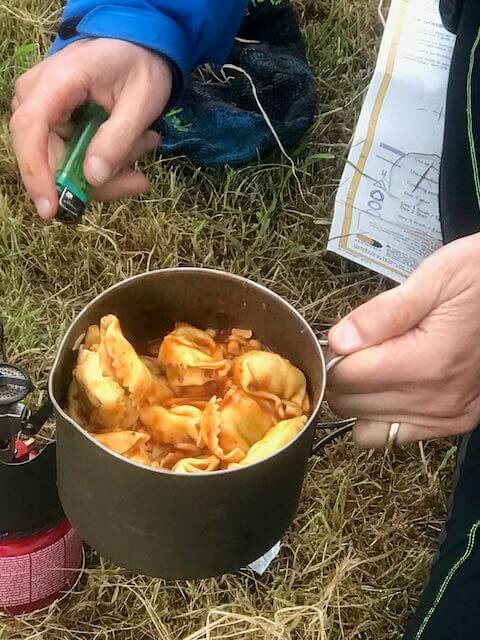
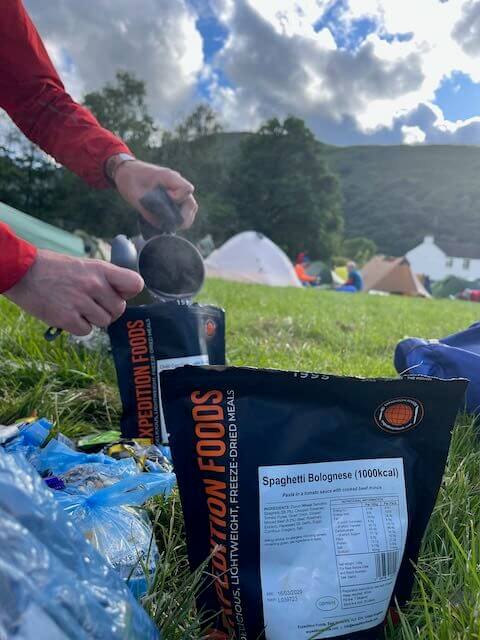
Taking part in a mountain marathon
The evening before – arrival at the event centre
This is usually a Friday evening. It is always and exciting feeling to be heading off after work on a Friday knowing that there is a great adventure ahead. There will be camping available at the event centre for tents and vans. Friday is all about getting registered, getting a good meal down and an early night. This is also the first time you will get a glimpse of the map that will be used. There are no controls marked on it at this point so there is always plenty of speculation about where the courses will take you – and where your mid camp will be!
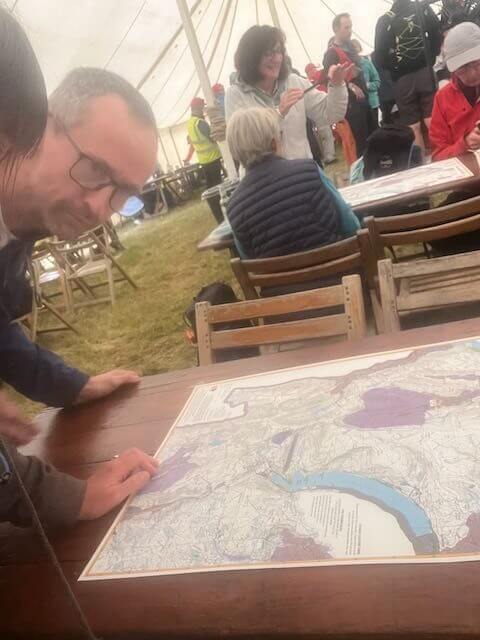
Saturday morning – start, map marking, go!
Starts are usually around 8am on the Saturday morning. You are allocated a 10 minute start window and pairs from different courses are set off (to avoid too much following!!). On the Saunders Lakeland Mountain Marathon (the OMM do this for you!), your first job is to mark the map (this is what the pen/pencil is for) with the controls from your description card. Speedy interpretation of grid references is required here!
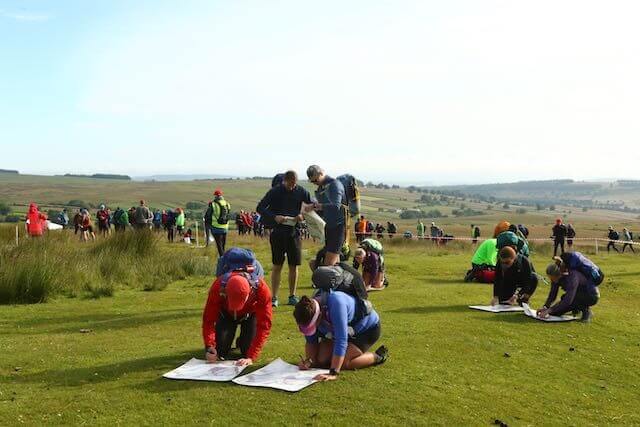
After marking up your map you are good to go. A day of route choice decisions, navigation and mountain running lies ahead.
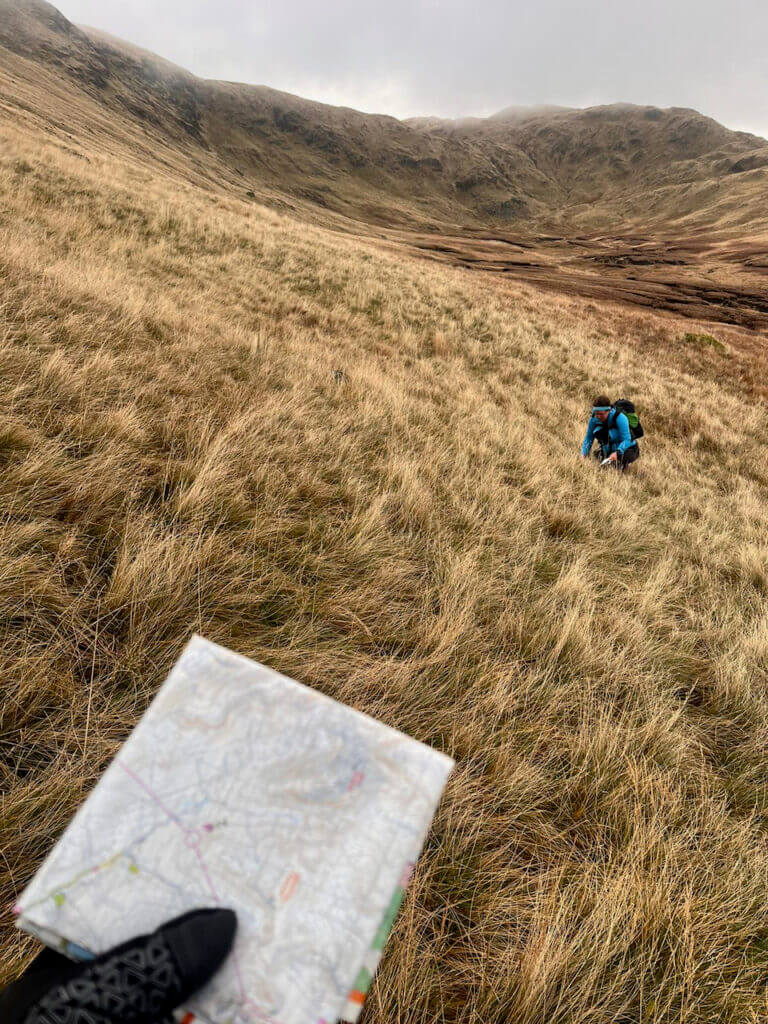
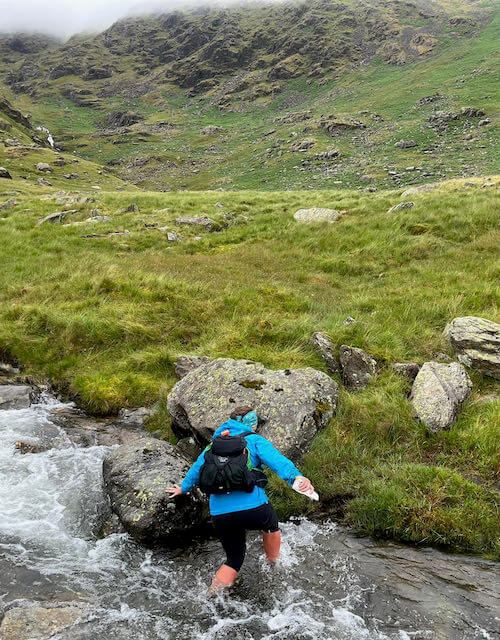
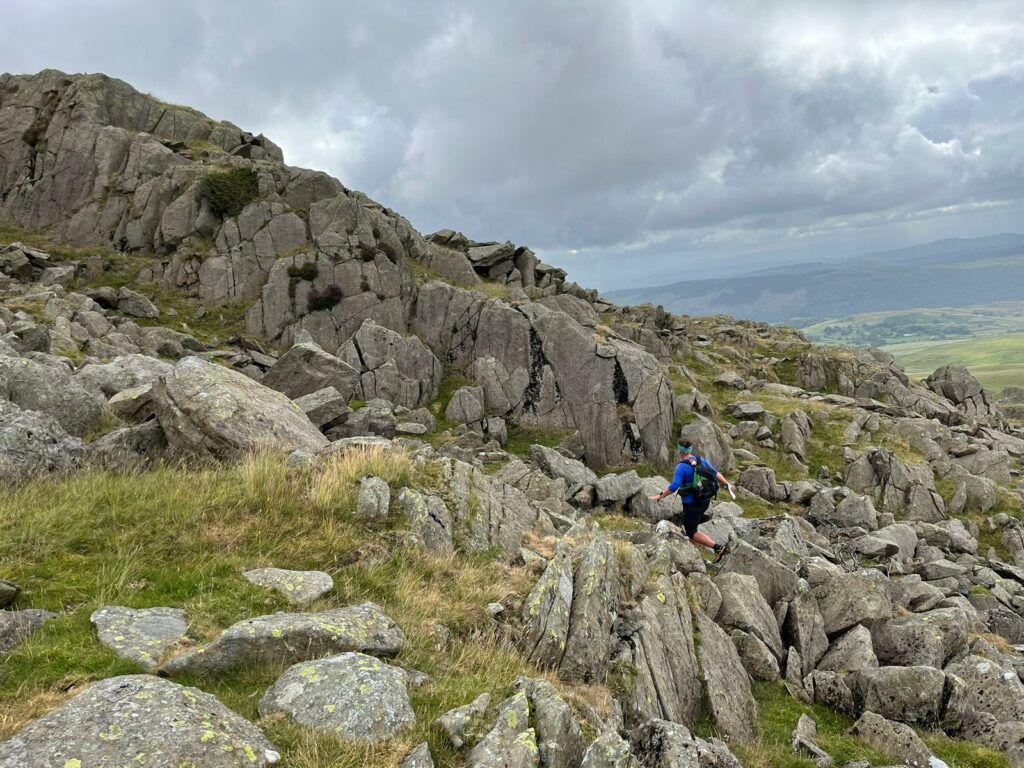
Saturday evening – camp life!
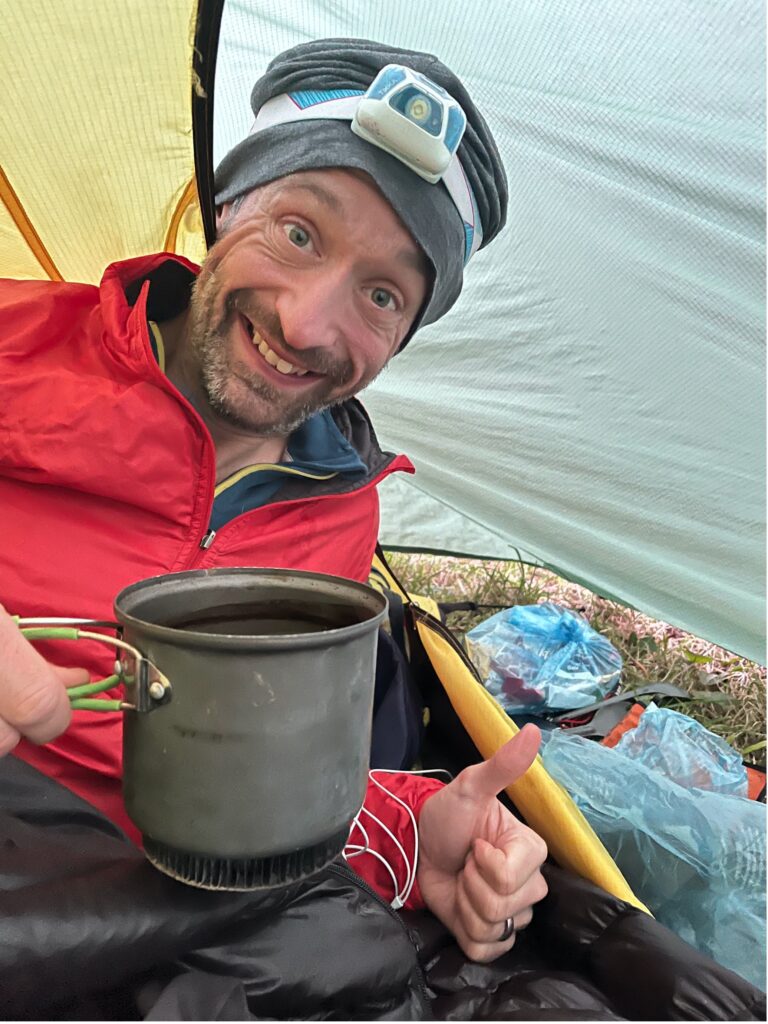
When you arrive into camp of the Saturday afternoon/evening your first priority will be to get your tent up before getting the stove on and cooking up whatever tasty treats you decided to bring.

Sunday morning
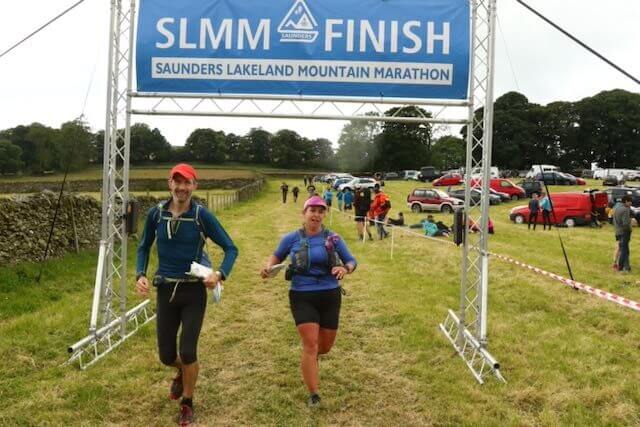
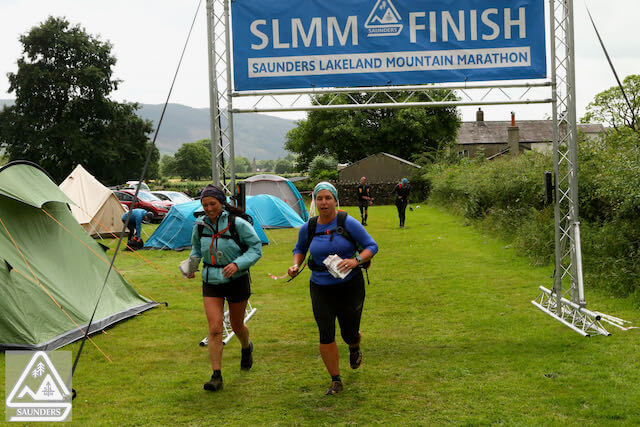
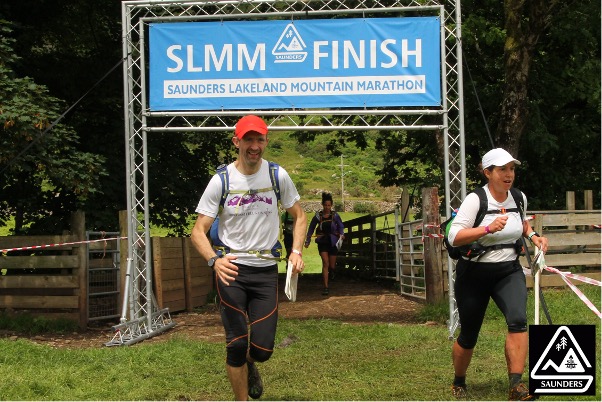
After a night’s ‘sleep’, you wake up on Sunday morning and get ready to go again! The worst part? Putting cold, wet socks on! The motivation? Knowing that there is a warm, dry pair waiting for you back at the event centre. Being able to get going again always feels improbable when you wake up. However, get that first hill out of the way, get your head back in the game and it’s remarkable that the legs get going again. Before you know it, you are running through the finish. Another adventure successfully completed.